Locomotion
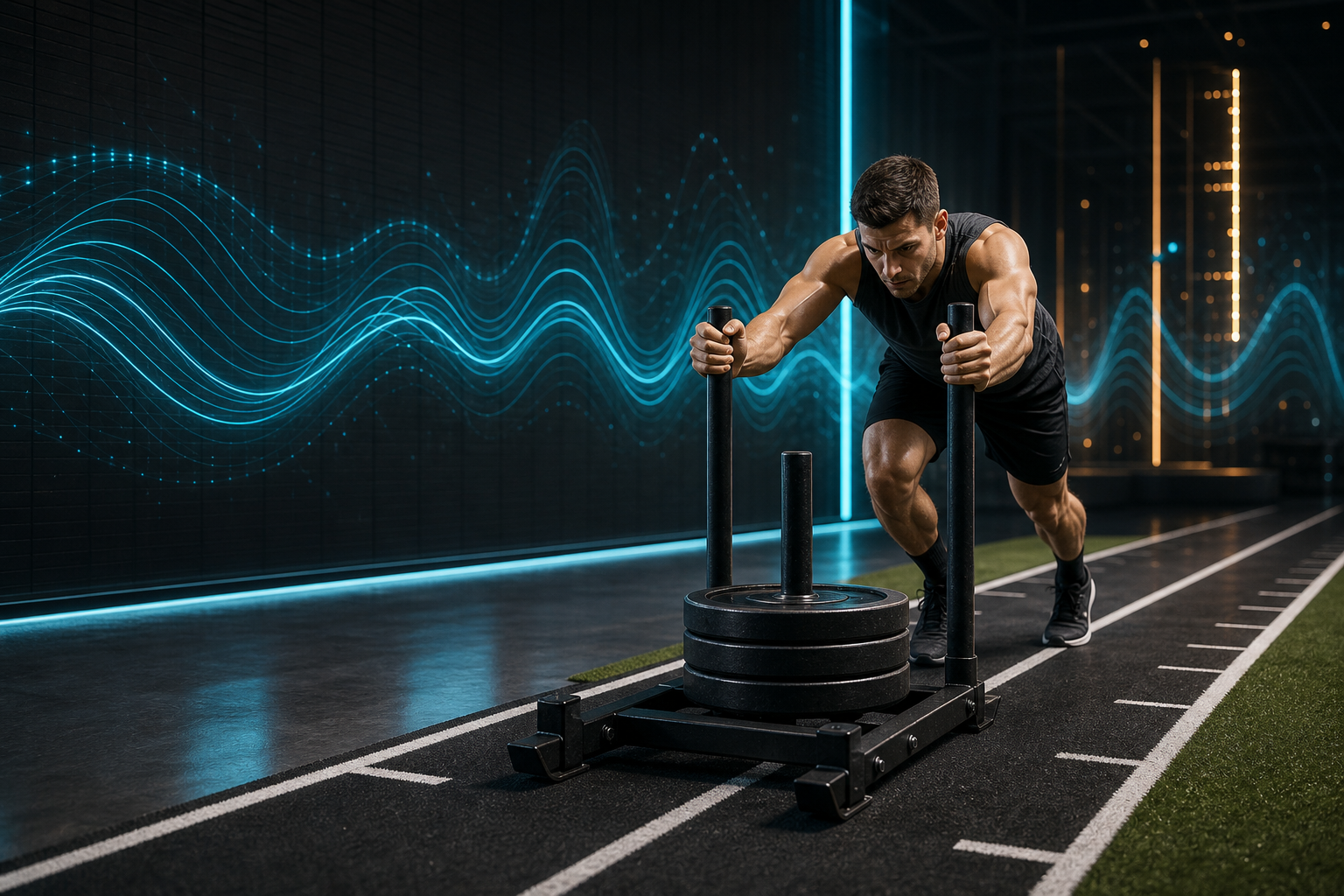
Push, pull, carry, climb. The heart rate rises while the body still has to express force.
cardiolifting.ashwinconcepts.com
Dr. Ashwin Kalyandurg, DO - World Record Handwalker
Heavy locomotion, rhythmic exhale, and calm force output. Not a treadmill replacement. A training environment that asks the lungs, connective tissue, and nervous system to adapt together.
The premise
Push, pull, carry, climb. The heart rate rises while the body still has to express force.
Assisted pull-ups and dips become grades: flat ground, hills, and mountains.
Humming during exhale turns breath into a metronome and gives effort a calmer edge.
Launch identity
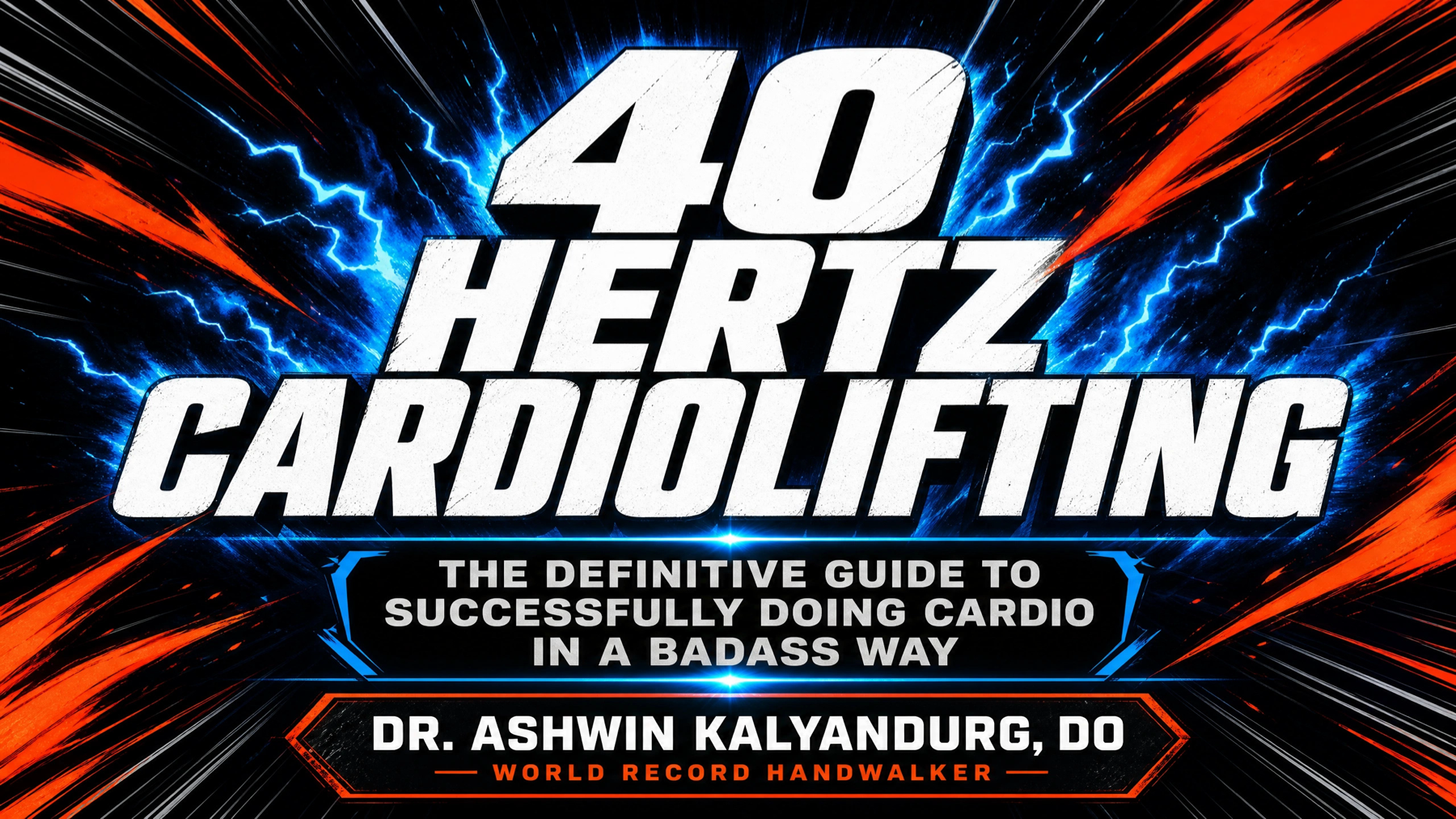
The PDF energy stays intact: electric, loud, unmistakably Ashwin. The web layer turns it into something usable: a live 40 Hz signal, a session composer, terrain mapping, and a safety gate that keeps the concept sharp.
Signal deck
The 40 Hz layer is treated here as a timing cue, not a medical intervention. Use low volume, nasal breathing when appropriate, and stop if symptoms feel wrong.
Protocol builder
Choose the shape, then let the work climb and descend. The output is deliberately simple: enough structure to train, not enough complexity to hide from effort.
Terrain map
Reset
Between hard efforts, the reset is not collapse. It is a short controlled bridge back to the next phrase.
Sharp inhale, medium exhale, sharp inhale, long exhale.
Research slate
The idea borrows from exercise physiology, tendon adaptation, nitric oxide research, and early 40 Hz stimulation work. The site should stay energetic without pretending that the protocol has been clinically validated.
Humming has been studied as a way to increase nasal nitric oxide compared with quiet exhalation. That supports the breathing cue, but it does not prove performance or disease outcomes for this protocol.
MIT and other groups describe expanding evidence for noninvasive 40 Hz gamma stimulation, mostly in neurological contexts. Cardiolifting should reference that cautiously, as adjacent science rather than direct proof.
Cyclic strain studies on human tendon support the broader idea that repeated mechanical loading can drive adaptation. The progression still needs load management and recovery.
Safety gate
Readiness: base layer. Keep the load conversational.
Training content only. Stop for chest pain, faintness, unusual shortness of breath, neurological symptoms, or pain that changes mechanics. Get medical guidance for cardiovascular, pulmonary, neurological, or orthopedic conditions.
Research desk
I like research@ashwinconcepts.com for the public inbox. It feels serious, flexible, and useful for article notes, citations, and collaboration.